The stance creates the fabrication problem.
On a lowered C10 or Squarebody, the chassis position changes the space available inside the cab and bed. The transmission, driveshaft, exhaust, rear suspension and tire travel all compete for room. Treating each interference separately usually creates awkward patches and poor service access.
The better approach is to establish the vehicle at its intended ride height with the major mechanical parts located. From there, the metal can be patterned as a connected system instead of a stack of unrelated fixes.
Cab, firewall, floor and transmission tunnel
Engine placement affects the firewall. Transmission height affects the tunnel. Chassis rise and exhaust routing affect the floor. Before any finished panel is made, those relationships need to be measured together.
- Confirm engine, transmission and driveline position.
- Check steering, pedal, header and accessory clearance.
- Plan removable access where future service will require it.
- Keep transitions smooth so the fabrication looks intentional before upholstery.
Do not build the pretty panel first.
Clearance, structure and serviceability come first. The visible shape is finished only after the hard points are established.
Bed raises and wheel-tub clearance
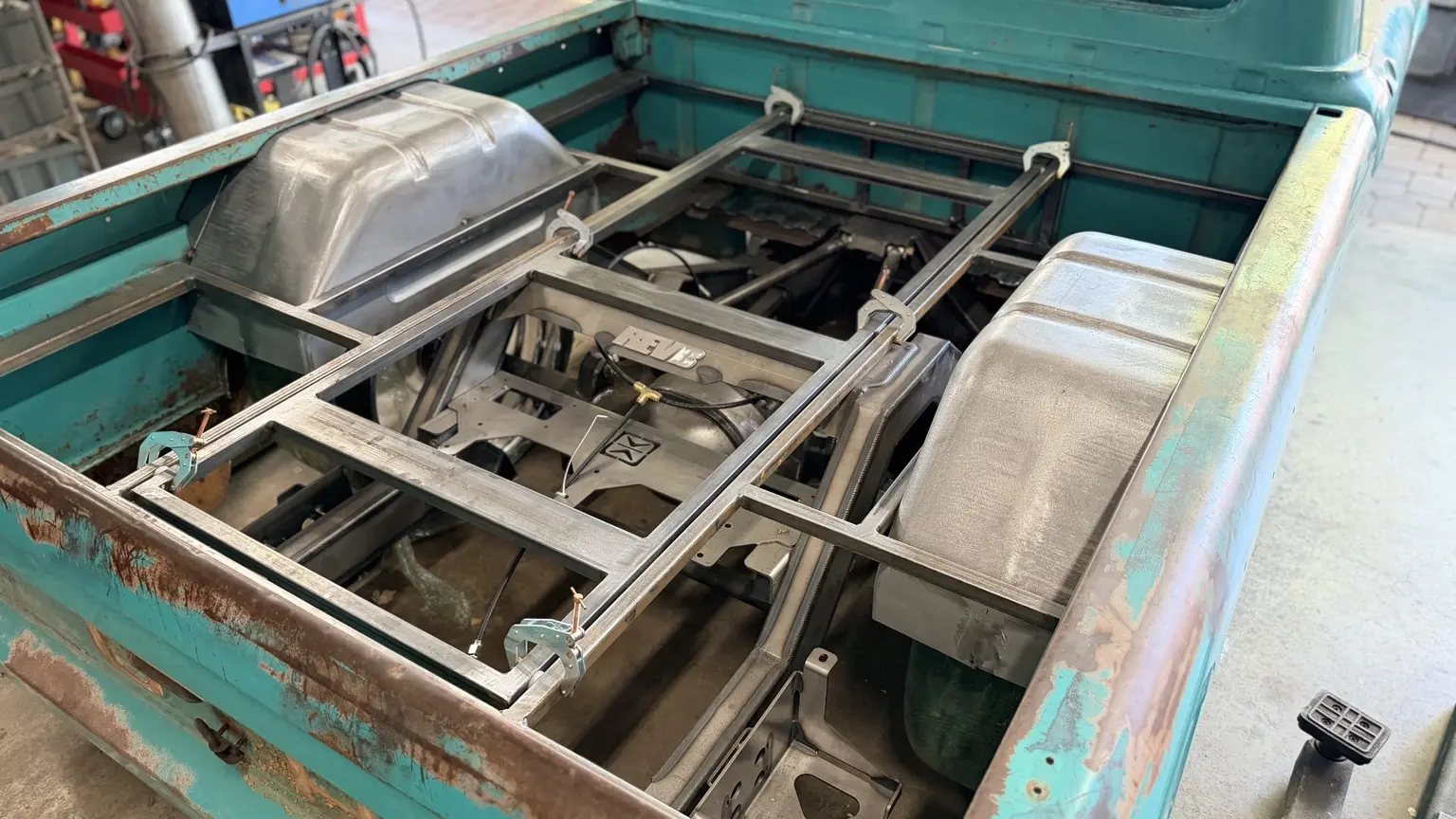
Air-ride and custom-chassis trucks often need more than a flat raised bed floor. The structure underneath has to clear the frame, rear suspension, differential and tires through their full movement. Wheel tubs must also match the tire size and finished bed layout.
A clean bed raise uses deliberate seams, consistent bead details and strong support. It should not look like a loose sheet was placed over the chassis.
RevB chassis sheet-metal integration
Marco Sheetmetal specializes in the body and sheet-metal work required around RevB chassis projects. Scott Nelson of RevB Chassis directly refers customers when a build needs firewall, floor, tunnel, bed or closeout fabrication. RevB and Marco Sheetmetal remain separate companies.
The same planning process also applies to other custom and aftermarket chassis. The vehicle, current assembly stage and required fabrication determine whether the project is a good fit.
What to send for a project review
Send the truck year and model, chassis manufacturer, wheel and tire size, drivetrain information, intended ride height, clear photos of the cab and bed, and a direct list of the metalwork still needed. Projects are reviewed in Mesa, Arizona for owners throughout Phoenix and the rest of Arizona.